
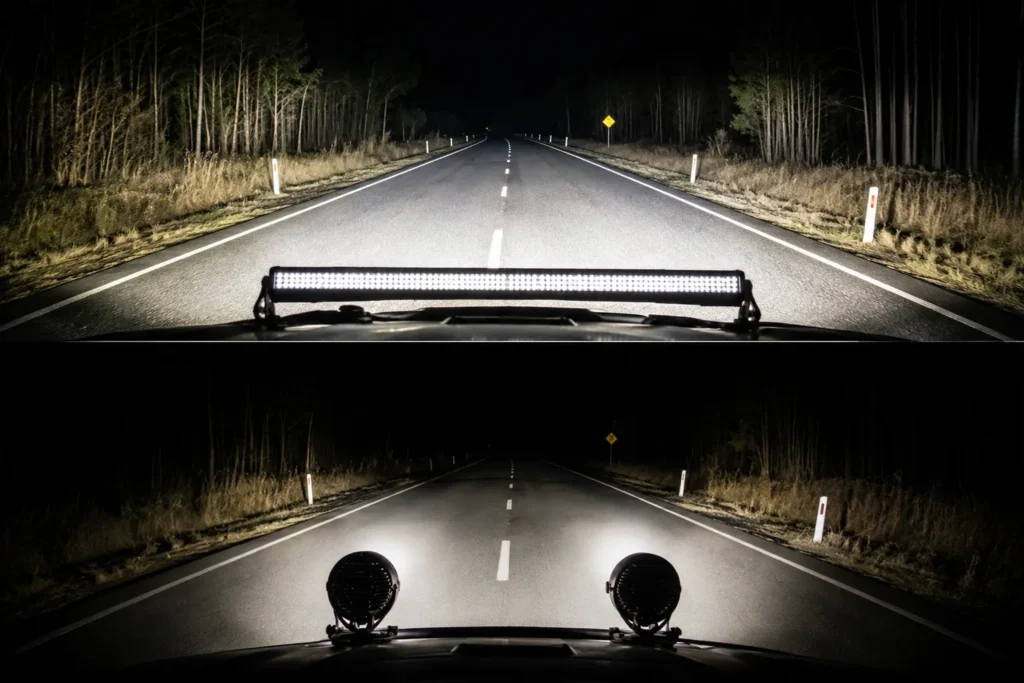
When comparing LED Bar vs Auxiliary Lights, drivers often focus on visibility, beam distance, and versatility. Both lighting options improve safety during night driving, but they serve different purposes. According to the U.S. Department of Transportation, reduced visibility contributes to nearly 50% of fatal crashes occurring after dark, despite lower traffic volumes. Proper auxiliary lighting helps drivers detect hazards earlier and react faster.
Modern LED technology has transformed off-road and winter driving. High-output light bars now deliver more than 20,000 lumens, while auxiliary lights offer targeted beam patterns for specific conditions. We have tested both systems in snow, rain, and rural environments. Each option offers distinct advantages depending on driving habits and terrain.
Understanding beam patterns, installation requirements, and legal considerations helps drivers choose the right setup. Some vehicles benefit from a single LED bar, while others perform better with multiple auxiliary lights. Selecting the correct lighting system improves visibility without causing glare for oncoming traffic.
LED Bar vs Auxiliary Lights: Understanding the Main Differences
What Is an LED Bar?
LED light bars consist of multiple LEDs arranged in a single housing. They provide broad illumination and are popular among off-road drivers. Common sizes range from 10 inches to 50 inches. Premium models generate between 8,000 and 30,000 lumens.
Straight bars deliver wide coverage, while curved designs improve side visibility. Most bars use a combination beam pattern, integrating flood and spot optics. This setup produces light distances exceeding 1,640 feet. Waterproof ratings of IP67 and IP68 ensure reliable operation in harsh weather.
Drivers commonly install LED bars on roofs, bumpers, or grilles. Their wide beam pattern works exceptionally well on trails and open roads. However, roof-mounted bars may increase wind noise and create hood glare under certain conditions.
What Are Auxiliary Lights?
Auxiliary lights are standalone lamps designed for specific lighting tasks. They typically come in pairs and use spot, flood, or driving beam patterns. Output ranges from 1,500 to 10,000 lumens per light.
Round auxiliary lights remain popular for trucks and overlanding vehicles. Spot beams can project light beyond 2,000 feet, making them useful on dark highways. Flood beams illuminate surrounding areas and improve peripheral awareness.
Auxiliary lights provide greater flexibility because drivers can position them independently. They also allow customized lighting combinations. This versatility makes them highly effective for winter driving, forestry work, and uneven terrain. Start your journey with our guide to LED light bars.
Visibility, Performance, and Beam Patterns
Beam Distance and Coverage
Visibility depends heavily on beam shape. LED bars excel at creating wide illumination across roads and trails. Combination bars typically provide a horizontal spread exceeding 120 degrees.
Auxiliary lights deliver more focused beams. Spot patterns concentrate light into narrow angles of 5 to 10 degrees. This design increases forward visibility and helps identify obstacles earlier. Professional rally teams often prefer dedicated auxiliary spotlights for long-distance vision.
The table below highlights the differences.
| Feature | LED Light Bar | Auxiliary Lights |
|---|---|---|
| Typical Output | 8,000–30,000 lumens | 1,500–10,000 lumens each |
| Beam Width | Up to 120° | 5°–90° |
| Maximum Distance | 1,640 feet | Over 2,000 feet |
| Common Installation | Roof, grille, bumper | Bumper, A-pillar, grille |
| Best Use | Off-road and wide coverage | Targeted long-range lighting |
| Average Cost | $120–$700 | $80–$500 per pair |
Weather Performance
Weather conditions influence lighting effectiveness. Snow and fog scatter bright white light, reducing visibility. Auxiliary lights with selective yellow lenses around 3,000K perform better during storms. Yellow wavelengths create less reflection from snow and moisture.
LED bars often use color temperatures between 5,700K and 6,500K. These produce daylight-like brightness but may increase glare in foggy environments. Drivers in northern climates frequently combine white LED bars with amber auxiliary lights for balanced performance.
Installation, Cost, and Practical Applications
Which Option Is Easier to Install?
Installation complexity varies considerably. Small auxiliary lights require minimal wiring and mounting hardware. Most installations take two to four hours. Vehicle-specific brackets simplify the process further.
Large LED bars demand stronger mounting systems and heavier wiring harnesses. Roof-mounted configurations may require drilling. Professional installation costs range from $150 to $400, depending on vehicle design.
Several factors should influence the decision:
- Driving environment.
- Weather conditions.
- Required beam distance.
- Vehicle size.
- Budget limitations.
- Local lighting regulations.
Which Option Delivers Better Value?
The answer depends on the intended use. Drivers who regularly travel off-road benefit from LED bars because they provide expansive coverage. Meanwhile, auxiliary lights excel when long-range precision matters most.
Based on our field observations, many experienced drivers combine both systems. A 20-inch LED bar paired with two auxiliary spotlights creates excellent visibility. This configuration improves depth perception and side illumination without sacrificing beam distance.
Premium systems from established manufacturers often last more than 50,000 hours. Their aluminum housings and advanced heat sinks maintain performance under extreme temperatures. Properly installed lighting systems also consume less power than traditional halogen alternatives.
Conclusion
The comparison between LED Bar vs Auxiliary Lights ultimately depends on driving needs. LED bars provide outstanding wide-angle illumination and work well for off-road adventures. Auxiliary lights deliver focused beams and superior long-distance visibility. Drivers facing snow, rural roads, or changing terrain often benefit from combining both systems. We recommend evaluating beam patterns, weather conditions, and installation requirements before making a decision. Choosing the right lighting setup improves safety, increases confidence, and ensures better visibility during every journey.