
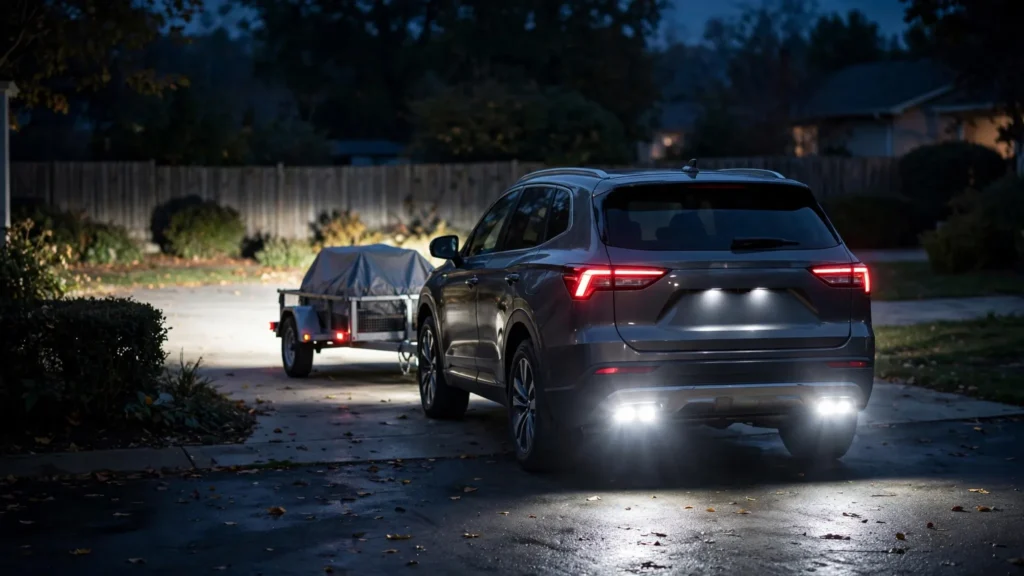
Reversing Lights play a vital role in improving visibility whenever we back up, park, or connect a trailer. Factory reverse lights often provide limited illumination, especially in rural areas, poorly lit parking lots, construction sites, and off-road environments. Upgrading to quality reversing lights helps drivers spot obstacles, pedestrians, curbs, and equipment earlier, reducing the chance of accidents.
Modern reversing lights use advanced LED technology that delivers brighter output while consuming less power than traditional halogen bulbs. Many premium models also feature weather-resistant housings, long operating lifespans, and wide beam patterns designed for maximum rear visibility. Selecting the right lights requires more than choosing the brightest option.
Beam distribution, mounting position, durability, legal compliance, and electrical compatibility all influence real-world performance. We recommend evaluating every factor before making a purchase. The right lighting setup improves confidence during nighttime parking, trailer hookups, and reversing in challenging weather conditions while maintaining reliable performance for years.
Why Quality Reversing Lights Matter
Improved Rear Visibility in Every Situation
Quality Reversing Lights dramatically improve what drivers can see behind their vehicles. Standard factory lighting may illuminate only a short distance, making it difficult to detect obstacles in dark environments. High-performance LED reversing lights extend usable visibility and create a wider field of view.
Key benefits include:
- Better pedestrian detection.
- Improved trailer alignment.
- Safer parking in dark locations.
- Increased confidence during off-road driving.
- Better visibility during rain and fog.
Brighter lighting does not simply improve convenience. It helps reduce low-speed collisions that frequently occur while reversing in limited visibility.
Brightness, Beam Pattern, and Color Temperature
Selecting the Right Lighting Performance
Brightness is commonly measured in lumens, but higher numbers alone do not guarantee better performance. Effective reversing lights combine sufficient brightness with an optimized beam pattern that spreads light evenly across the driving area.
A color temperature between 5,000K and 6,500K produces a natural white light that improves contrast without excessive glare. Flood beam patterns work well for parking and towing because they illuminate a wider area behind the vehicle. Spot beams may project farther but often leave dark zones near the bumper.
When evaluating products, compare both lumen output and beam distribution instead of focusing on brightness alone.
Build Quality and Weather Protection
Durability Makes a Long-Term Difference
Outdoor lighting constantly faces water, mud, vibration, dust, road salt, and changing temperatures. Durable reversing lights maintain consistent performance despite these harsh conditions.
Look for features such as:
| Feature | Why It Matters |
|---|---|
| Aluminum housing | Dissipates heat efficiently. |
| Polycarbonate lens | Resists impacts and scratches. |
| IP67 or IP68 rating | Protects against dust and water. |
| Stainless steel brackets | Prevent corrosion over time. |
| Vibration-resistant design | Suitable for towing and rough roads. |
Premium construction extends service life while reducing maintenance costs over time.
Choosing the Right Size and Mounting Position
Proper Placement Improves Performance
Installing reversing lights in the correct location is just as important as selecting the light itself. Lights mounted too high or too low may create glare or leave important areas unlit.
Common mounting locations include:
- Rear bumper.
- Tow hitch brackets.
- Roof racks for work vehicles.
- Rear canopy frames.
- Trailer frames.
Drivers who tow frequently often benefit from additional lights positioned closer to the trailer connection point. This placement improves visibility while coupling equipment at night.
Before installation, verify that the mounting location provides adequate clearance and complies with local vehicle lighting regulations.
Compatibility, Wiring, and Legal Requirements
Ensure Safe Installation
Before purchasing Reversing Lights, confirm compatibility with your vehicle’s electrical system. Most passenger vehicles operate on 12-volt systems, while many commercial trucks use 24-volt electrical systems.
Quality wiring kits should include:
- Waterproof connectors.
- Automotive-grade wiring.
- Inline fuse protection.
- Relay harness where required.
- Secure grounding points.
Professional installation can improve long-term reliability, particularly for vehicles used in commercial environments. Always confirm that auxiliary reversing lights comply with local road regulations regarding brightness, activation, and placement before installation.
Expert Tips for Selecting the Best Reversing Lights
Years of field testing show that balanced performance consistently delivers better results than chasing the highest specifications. We recommend considering the complete package rather than one feature.
Our recommendations include:
- Choose reputable manufacturers with tested performance.
- Prioritize beam quality over maximum lumen claims.
- Select waterproof models rated at least IP67.
- Match the voltage with your vehicle.
- Verify warranty coverage.
- Use corrosion-resistant mounting hardware.
- Follow the manufacturer’s installation instructions carefully.
These practical considerations help maximize both safety and product lifespan. Explore our latest insights on LED Bar vs Auxiliary Lights.
Conclusion
Choosing the right Reversing Lights improves safety, visibility, and driving confidence during parking, towing, and nighttime reversing. Brightness, beam pattern, weather protection, mounting position, and electrical compatibility all contribute to overall performance. Durable LED systems provide efficient lighting with minimal maintenance while lasting significantly longer than traditional halogen alternatives.